

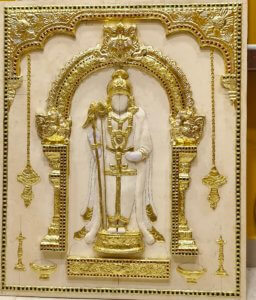
Muck Paste Work in Tanjore Paintings is the defining technique that gives this classical South Indian art its iconic 3D embossed appearance. This traditional method creates raised relief on ornaments, crowns, jewellery, and architectural elements, transforming a flat surface into a visually rich and divine artwork. Without muck paste work, a Tanjore painting loses its depth, grandeur, and authenticity.
This technique originated during the Chola and Nayak periods, when artists decorated temple walls and royal portraits with raised detailing to reflect divinity and prosperity. Even today, master artists follow the same principles to preserve the originality of this heritage art.
Importance of Muck Paste Work in Tanjore Paintings
Muck Paste Work in Tanjore Paintings plays a crucial role in defining quality and value. It creates physical elevation, allowing light to reflect beautifully from gold foil surfaces. This reflection gives the painting its signature glow and majestic appearance.
Unlike flat paintings, embossed Tanjore artworks feel alive. The raised areas enhance facial expressions, jewellery depth, and ornamental richness. This technique also strengthens the structure of the artwork when done correctly, ensuring long-term durability.
Materials Used for Muck Paste Work in Tanjore Paintings
Traditional Muck Paste Work in Tanjore Paintings uses natural, time-tested materials. Artists prepare the paste using a combination of:
-
Limestone powder or chalk powder
-
Tamarind seed glue or Arabic gum
-
Natural binders for strength and flexibility
These Materials used in Tanjore Painting allow slow drying, which helps artists shape intricate details without cracks. Authentic artists avoid chemical fillers, as they reduce lifespan and compromise quality.
How Muck Paste Work in Tanjore Paintings Is Created
The process of Muck Paste Work in Tanjore Paintings requires patience, experience, and precision. Artists follow these essential steps:
-
Design Transfer – The artist sketches the deity and ornaments on a wooden board prepared with cloth and natural adhesive.
-
Paste Application – The artist applies muck paste carefully along jewellery, crowns, arches, and decorative elements.
-
Relief Building – Multiple layers create the desired height and depth. Artists control thickness to maintain balance.
-
Drying Process – Natural drying prevents cracks and ensures long-lasting strength.
-
Gold Foil Application – Artists apply pure gold foil only after the paste fully sets, enhancing shine and elegance.
Each step directly affects the final quality of the painting.
Why Muck Paste Work in Tanjore Paintings Creates 3D Effect
Muck Paste Work in Tanjore Paintings produces a natural three-dimensional effect by physically raising selected areas. Unlike digital or painted shading, this technique creates real depth. When light hits the gold foil applied over the raised paste, it reflects differently from each angle, creating a divine glow.
This effect makes traditional Tanjore paintings stand out in temples, pooja rooms, and heritage interiors.
Difference Between Authentic and Imitation Muck Paste Work in Tanjore Paintings
Authentic Muck Paste Work in Tanjore Paintings feels solid and well-balanced. The embossed areas remain intact for decades without peeling or cracking. Imitation works often use synthetic compounds, quick-dry fillers, or rubber paste, which may look attractive initially but deteriorate over time.
Original muck paste:
-
Maintains structural integrity
-
Supports pure gold foil adhesion
-
Ages gracefully without damage
Spiritual Significance of Muck Paste Work in Tanjore Paintings
Beyond aesthetics, Muck Paste Work in Tanjore Paintings carries spiritual meaning. Raised ornaments symbolize abundance, divine power, and sacred energy. Temples traditionally used embossed art to emphasize the grandeur of deities, reinforcing devotion and reverence.
This spiritual symbolism makes embossed Tanjore paintings highly auspicious for homes and worship spaces.
Why Mastery of Muck Paste Work in Tanjore Paintings Matters
Only skilled artists can control relief height, symmetry, and balance in Muck Paste Work in Tanjore Paintings. Incorrect thickness causes cracks, uneven gold application, or visual imbalance. Years of practice help artists achieve flawless results that last for generations.
This mastery distinguishes professional Tanjore artists from mass-produced alternatives.
Conclusion: The Soul of Muck Paste Work in Tanjore Paintings
Muck Paste Work in Tanjore Paintings forms the heart of this traditional art form. It defines authenticity, durability, spiritual depth, and visual grandeur. When executed using traditional methods and natural materials, this technique transforms a painting into a timeless devotional masterpiece.
Understanding muck paste work helps art lovers appreciate the craftsmanship behind every authentic Tanjore painting and make informed choices when buying or learning this sacred art.