

Indian Traditional Art reflects the country’s deep cultural roots, spiritual values, and regional diversity. Among these art forms, Tanjore Painting stands out for its richness, vibrant colors, and iconic gold foil work. But how does it compare with other Indian traditional art forms? Let’s explore.
What Makes Tanjore Painting Unique?

Tanjore Painting, originating from Tamil Nadu, is known for its divine themes and luxurious appearance. Artists use real gold foil, bright natural colors, and an embossed technique that gives a three-dimensional effect. Most paintings depict Hindu deities like Krishna, Lakshmi, and Shiva.
This Traditional Art form is highly durable and often passed down through generations. Its richness makes it a preferred choice for pooja rooms and spiritual decor.
Madhubani Painting – Folk Beauty from Bihar

Madhubani is a popular Traditional Art from Bihar. Unlike Tanjore Painting, it focuses on detailed patterns, geometric designs, and nature-inspired themes. Artists use natural dyes and often paint on walls, cloth, or handmade paper.
While Tanjore emphasizes gold and richness, Madhubani highlights storytelling and cultural rituals.
Warli Art – Simplicity in Expression

Warli Art, from Maharashtra, is one of the simplest forms of Traditional Art. It uses basic shapes like circles, triangles, and lines to depict daily life and tribal culture.
Unlike the detailed and ornate Tanjore Painting, Warli Art is minimalistic and monochromatic, usually painted in white on a mud background.
Pattachitra – Mythology in Fine Detail

Pattachitra, from Odisha, is another intricate Traditional Art form. It focuses on mythological stories, much like Tanjore Painting, but without the use of gold foil. Artists create detailed borders and fine line work using natural colors.
While both art forms share religious themes, Tanjore Painting stands out for its embossed and rich texture.
Kalamkari – Storytelling Through Fabric

Kalamkari is a textile-based Traditional Art from Andhra Pradesh and Telangana. Artists use natural dyes and hand-drawing techniques to create detailed narratives on fabric.
Compared to Tanjore Painting, Kalamkari is more fluid and used in clothing and décor, while Tanjore remains a panel-based art known for its structure and durability.
Key Differences at a Glance
-
Material & Texture: Tanjore Painting uses gold foil and embossing, while other Traditional Art forms use natural dyes, fabric, or simple paint.
-
Theme: Tanjore focuses mainly on deities, whereas others include nature, daily life, and folklore.
-
Style: Tanjore is rich and decorative; Warli is minimal; Madhubani and Pattachitra are detailed and narrative.
-
Usage: Tanjore is ideal for spiritual décor, while other Traditional Art forms suit walls, textiles, and storytelling purposes.
Why Tanjore Painting Still Stands Out
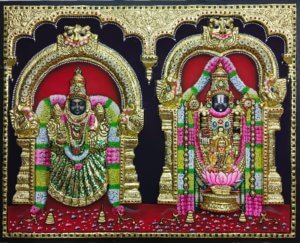
Tanjore Painting continues to hold a special place in Indian Traditional Art because of its timeless appeal and spiritual depth. Its use of gold and structured composition gives it a royal look that few other art forms can match.
At Bavin Tanjore Paintings, each artwork is handcrafted with care, preserving this ancient tradition while adapting it to modern homes.
The Growing Value of Traditional Art in Modern Homes
In today’s fast-paced world, Traditional Art is gaining renewed importance as people look to reconnect with culture and authenticity. Art lovers are choosing handcrafted pieces over mass-produced décor, valuing the story, effort, and heritage behind each creation. Tanjore Painting, along with other traditional forms, adds character and meaning to modern interiors.
It not only enhances aesthetics but also preserves centuries-old craftsmanship. Investing in Traditional Art is not just about decoration—it is about supporting artisans, sustaining culture, and bringing timeless elegance into everyday living spaces.
Every Indian Traditional Art form has its own beauty and story. While Madhubani, Warli, Pattachitra, and Kalamkari reflect regional culture and creativity, Tanjore Painting shines with its divine elegance and rich craftsmanship.
Choosing between them depends on your style and purpose—but if you seek tradition with grandeur, Tanjore Painting remains unmatched.